Contact Information
OKCADP
P.O. Box 713
Oklahoma City, Oklahoma 73101
Phone: 405.948.1645
Viewer's Guide for

We are delighted to let you know that a Viewer’s Guide for NO TOMORROW is now available and can be downloaded from our website at http://www.pppdocs.com/notomorrow.html.  

Soon a downloadable version of the Guide will also be posted on WNET.org and PBS.org.  The guide includes a synopsis of the film; a Who’s Who in the film; Directors’ statements about our motivations for making the film and our concerns about the unexpected use of our previous documentary; a map of states with the death penalty as well as states with pending legislation to reform or abolish capital punishment; a map of the world showing which countries still use the death penalty; a discussion guide that breaks down the key issues raised by the film; a brief sketch of significant Supreme Court rulings on the death penalty; an analysis of public opinion polling on the death penalty; a list and description of key organizations working on the death penalty with links to their websites and publications; and a list of important books, articles, and films about capital punishment.  
 
We hope you to take advantage of this useful resource.  

Announcements
Parade magazine and costs of death penalty

 The widely distributed Parade magazine debates the costs of capital punishment.

Death Penalty Curriculum Resources

Curriculum resources for exploring the death penalty are highlighted in Information:  Education Section; resources for both adults and high school students.

previous month  May 2012  next month
Main Calendar
S M T W T F S
  12345
6789101112
13141516171819
20212223242526
2728293031  
      View Full-Page Calendar
Home


May 15, 2012

FOR IMMEDIATE RELEASE

Oklahoma Coalition to Abolish the Death Penalty
Tuesday, May 14, 2012
Contact:   Lydia Gill Polley, OK-CADP Co-Chair, 405-206-6061 or 405-948-1103 
 
New investigation indicates another innocent man executed 
 
Oklahoma City - Columbia University law professor James Liebman published findings in the 2012 spring issue of Columbia Human Rights Law Review. to report that he and a team of students have proven that Texas gave a lethal injection to the wrong man. Check out their evidence at www3.law.columbia.edu/hrlr/ltc.
 
In  2006, Chicago Tribune investigative reporters Maurice Possley and Steve Mills revealed groundbreaking evidence that Texas may have executed an innocent man in 1989. The defendant, Carlos DeLuna, was executed for the fatal stabbing of Texas convenience store clerk Wanda Lopez in 1983.  The reporters had uncovered evidence that cast doubt on DeLuna’s guilt and pointed towards Carlos Hernandez, who looked very much like DeLuna. Hernandez had a record of similar crimes and repeatedly confessed to the murder. 
 
One of the strongest arguments against the death penalty is the horrific chance of executing an innocent person. Carlos De Luna was executed in 1989 based on eyewitness testimony, which formed the foundation of the case against him.
 
"If a new trial was somehow able to be conducted today, a jury would acquit De Luna,” said Richard Dieter, executive director of the Death Penalty Information Center, who read a draft of Liebman's report. "We don't have a perfect case where all can agree that we have an innocent person who's been executed, but by weight of this investigation, I think we can say this is as close as a person is going to come."
 
“The Oklahoma Coalition to Abolish the Death Penalty (OK-CADP) is grateful to the Columbia Law School’s intensive investigation that provides an astonishing array of evidence that Texas executed another innocent man—Carlos DeLuna,” said OK-CADP co-chair Lydia Gill Polley.   “Sadly, Carlos DeLuna’s case is not unique. Many others, including Shaun Stemple that Oklahoma executed March 15, 2012, plus Cameron Todd Willingham, Ruben Cantu, Larry Griffin, Gary Graham, and Troy Davis, who have all been executed despite grave doubts about their guilt.  The cracks in the system that sent DeLuna to his death – unreliable eyewitness identification, inadequate legal representation, and prosecutorial misconduct – are still sending innocent people to death row today.”


According to the Death Penalty Information Center, there is no way to tell how many of the over 1,000 people executed since 1976 may have been innocent.  Courts do not generally entertain claims of innocence when the defendant is dead. 
 
“When innocent people are executed, it is an unimaginable tragedy,” said Polley.  “That tragedy is made worse when the real perpetrators go free to commit more violent crimes. While DeLuna was on death row, Hernandez’s violence against women continued. He stabbed and attempted to rape another woman.”
 
Founded in 1992 by Barry C. Scheck and Peter J. Neufeld, The Innocence Project is one of a number of non-profit legal organizations dedicated to proving the innocence of wrongly convicted people through the use of DNA testing, and to reforming the criminal justice systems to prevent future injustice
 
To date, 289 people in the United States have been exonerated by DNA testing, including 17 who served time on death row. They were convicted in 11 states and served a combined 209 years in prison – including 187 years on death row – for crimes they didn’t commit.
 
“How can we trust a system that has released ten men from Oklahoma’s death row with evidence of their innocence? It seems highly likely to me, that we too have executed some who were innocent. We hope that Shaun Stemple’s name will be cleared in time as Carlos DeLuna’s has been,” said Polley.
 
For more information visit okcadp.org.


May 13, 2012

Follow the news about Joint Resolution 25. On the November 2012 Ballot, Joint Resolution 25 would change the Oklahoma Constitution,  removing the Governor from the Pardon & Parole Board's decisions regarding non-violent offenders.

http://www.oksenate.gov/news/press_releases/press_releases_2012/pr20120319a.html 


Reservation Options

__________________________________________


April 20, 2012 Ruling on Lead NC Racial Justice Act Case

· The lead case applying the historic and ground-breaking NC Racial Justice Act (RJA) concluded today with a judicial finding of race discrimination in the operation of the death penalty in North Carolina.

· North Carolina Superior Court Judge Gregory Weeks found that prosecutors deliberately excluded qualified black jurors from jury service in death row inmate Marcus Robinson’s case, in Cumberland County, and throughout the state.

· As directed by the law, the Court stated that parole eligibility was not an option under the Racial Justice Act, and resentenced Marcus Robinson to life imprisonment without possibility of parole.

· In enacting the RJA, the North Carolina General Assembly and Governor Perdue made clear that the state of North Carolina rejects the influence of race discrimination in the administration of the death penalty. The RJA represents a landmark reform in North Carolina, a state which has long been a leader in forward-thinking criminal justice policies.

· With today’s ruling, North Carolina continues its leading role as a state willing to honestly and fairly examine the affect of race in its criminal justice system.

· A Michigan State University study of jury selection practices in North Carolina capital cases between 1990 and 2010 was introduced as evidence in the hearing. Judge Weeks found it to be a valid, highly reliable, statistical study. The results of the study, with remarkable consistency across time and jurisdictions, show that race is highly correlated with decisions on striking jurors in North Carolina.

· The ruling and the findings of the MSU study are consistent with every major study of jury selection in capital cases done in the United States.

· Following this ruling, the NC Racial Justice Act allows for a fresh start by permitting prosecutors to remedy race discrimination through in depth training programs.

· This decision marks a new day for justice in North Carolina where the justice system acknowledges past discrimination and respects the rights of persons of all races to serve on juries.


____________________________________________
 
April 13, 2012
 
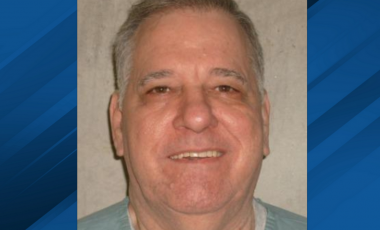
Garry Thomas Allen has been spared execution by lethal injection. Please read the stories surrounding the stay of execution for Garry Allen.


April 3, 2012

Sign the Petition asking Governor Falin to commute the sentence from death to life at http://bit.ly/HGHTEa

News About Campaign to Stop Execution can be seen at


http://newsok.com/group-asks-oklahoma-governor-to-reconsider-clemency/article/3662924


http://www.tulsaworld.com/news/article.aspx?subjectid=12&articleid=20120402_12_0_OLHMIY154136


____________________________________________________________________________


April 2, 2012

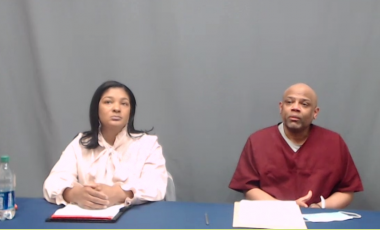
Please follow this link to the story about today's New Conference for Garry Allen


Coalition Urges Governor to Reconsider Denial of Clemency Recommended by
Pardon and Parole Board
 
 News Conference--State Capitol--Press Room #430
 Monday, April 2, 2012 11:00 am
 
OK-CADP is asking citizens to call the Governor's Office
  (405-521-2342) to grant clemency for Garry Allen
 
Sign Petition
 
 
 Oklahoma City – The Oklahoma Coalition to Abolish the Death Penalty  (OK-CADP) will hold a news conference Monday, April 2, at 11 a.m. in the State Capitol, 4th Floor Press Room to announce they are asking Governor Mary Fallin to reconsider her denial of clemency for Garry Thomas Allen.

In 2005, the Pardon and Parole Board carefully considered all factors and supported clemency by an unusually strong 4-1 vote. The governor is urged to give full weight to this Pardon and Parole Board’s recommendation.

“On March 13 Gov. Fallin denied clemency and set April 12, 6:00 pm for Garry Allen’s execution,” said Lydia Polley, OK-CADP Co-Chair.  “We are respectfully and urgently asking her to reconsider this decision.  Commuting his death sentence to life without parole achieves primary objectives of the criminal justice system: public protection, capital punishment, and faith in the system.   Governor Fallin has legal, humanitarian, and Christian-faith basis for this action. Mr. Allen’s severely limited mental capacity, extreme physical & mental deterioration from a bullet fired by police, AND an unprecedented 4-1 clemency recommendation from the Pardon & Parole Board enlivens our request.”

Speakers for the news conference include Reverend Adam Leathers, United Methodist Church; Kenny Fikes, OK-CADP Co-Chair; Constance Johnson, Oklahoma Senator; Garland Pruitt, President Oklahoma City Branch NAACP; and Lydia Polley, OK-CADP Co-Chair.  Allen’s daughter, Chandra Allen and his granddaughter Jasmine Allen will be present.

Even though he has no recollection of the crime, either as a result of extreme intoxication and/or being shot in the head when apprehended, the Allen family said Garry has deep seated and long-standing remorse for the actions he was told, and accepts, he committed.

The key reason for setting aside the death penalty for Garry Allen is the issue of culpability. Since Garry Allen was sentenced to death, the United States Supreme Court has prohibited use of the death penalty in two cases of limited culpability: Juveniles and Mentally Retarded capital murderers. 

Allen's attorneys have argued that he was mentally impaired when he killed 42-year-old Lawanna Gail Titsworth, the mother of his two children, on Nov. 21, 1986, in Oklahoma City. They say he had been self-medicating for an underlying mental illness, and that his mental condition had only gotten worse.

The Oklahoma Pardon and Parole Board voted 4-1 to recommend commuting Allen's sentence to life. But before the governor at the time, Brad Henry, had a chance to act on the board's recommendation, a Pittsburg County judge issued a stay after a prison psychological exam determined Allen had developed mental problems on death row. The doctor's report noted Allen had dementia caused by seizures, drug abuse and his gunshot wound.

Jasmine Allen, granddaughter of Garry Allen said, “Our efforts to persuade Governor Fallin to reconsider this decision are in full swing, with calls, letters, petitions to the Governor, letters to editors, news conference, etc.  My mother and I want to thank the OK-CADP, our friends and the public, for any energy, prayers, and assistance they can send our way.”

In 1986, a police officer responding to a 911 call struggled with Allen before shooting him in the face, according to court documents. Allen was hospitalized for about two months for treatment of injuries to his face, left eye and brain.

Allen was initially declared incompetent to proceed to trial and treated for over 4 months at a mental hospital after being diagnosed with chronic paranoid schizophrenia.  He spoke of hearing voices and seeing visions.  Just ten days later, a new doctor wrote to the court that Allen had been restored to competency.

Neuropsychological evidence of Allen’s brain damage was omitted from the factors that determined sentencing. A competency jury deemed Allen competent under a standard of proof subsequently declared unconstitutional by the Supreme Court.

In 2002, the Supreme Court ruled that executing people with mental retardation violates the Constitution's ban on "cruel and unusual" punishment.

“Garry T. Allen is not a threat to his fellow prisoners or prison workers, and should serve the remainder of his life in an appropriate state facility. The State of Oklahoma should not execute this mentally ill and remorseful man,” said Fikes.  “In Mr. Allen’s case, guilt is not an issue.  The issue is Mr. Allen’s mental competency and condition.  We are standing with Mr. Allen’s family in requesting that our Governor please give credence to the recommendation of the State’s Pardon and Parole Board: which is to grant clemency in this case.”  

Barring this act of mercy and caution by Gov. Mary Fallin, Garry Thomas Allen - 56 year old son, father, grandfather and death row prisoner - will be executed at 6 p.m., on Thursday, April 12, at the Oklahoma State Penitentiary in McAlester.


July 2011

The Death Penalty Information Center has released a new report, "Struck by Lightning: The Continuing Arbitrariness of the Death Penalty Thirty-Five Years After Its Reinstatement in 1976." The report shows that despite the changes to sentencing schemes approved by the U.S. Supreme Court on July 2, 1976, race, geography, money and other factors continue to make the implementation of the death penalty arbitrary and unfair.  A majority of the nine Justices who served on the Supreme Court in 1976 when the death penalty was approved eventually concluded the experiment had failed. The report concludes, "Thirty-five years of experience have taught the futility of trying to fix this system.  Many of those who favored the death penalty in the abstract have come to view its practice very differently.  They have reached the conclusion that if society’s ultimate punishment cannot be applied fairly, it should not be applied at all."

Capital punishment harmful for families of victims 

   Comment on this article 0
Published: August 27, 2010
 
 Regarding “Federal judge issues stay of execution for Oklahoma death row inmate” (news story, Aug. 18): I extend my sympathies to the families of Otis Short and Jeffrey Matthews, who faces execution for the murder of Short, his great uncle. I understand their hurt. My daughter, Julie Marie Welch, died in the 1995 Oklahoma City bombing. My anger and pain was like no other. I wanted nothing more than the perpetrators’ execution. But I remembered a conversation with Julie some time before she was killed. She said that killing people who kill solves nothing.

 I subsequently met Timothy McVeigh's father. He and I found we had in common our love for our children and grief over losing my daughter and his son. In my work sharing Julie's memory around the world, I've met many people close to the death penalty. I know firsthand the harm it causes to the family members of murder victims and those facing execution; to the prison personnel conducting executions; and to our communities still victimized by homicides because capital punishment doesn't deter them.

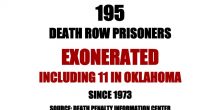
It's particularly disturbing that capital punishment has few protections against wrongful executions. In recent years, 10 Oklahomans were freed from death row by evidence that proved them innocent. If no evidence links Matthews to his great uncle's murder, every precaution must be taken so Matthews is not mistakenly executed and the anguish of both families over their loved one's murder isn't compounded by Matthews' wrongful death.

Bud Welch, Oklahoma City

Welch is a member of the board of directors of the Oklahoma Coalition to Abolish the Death Penalty.


Click here to see an article from Catholics Against Capital Punishment regarding teachings in the Catholic Church.